
Sanctus Magnus
Patron of Orkney
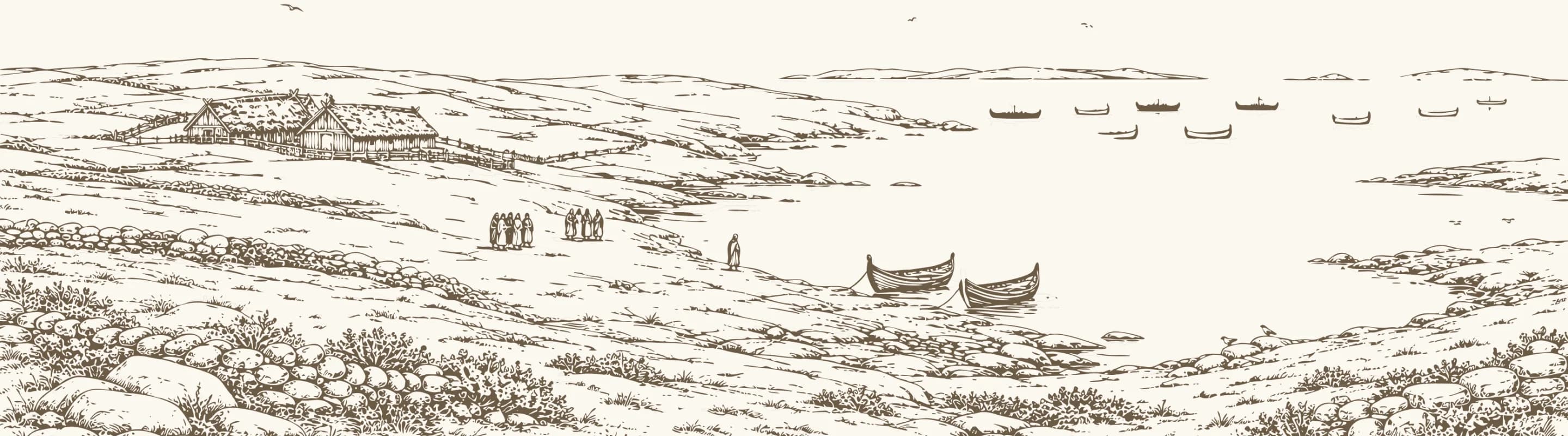
Magnus Erlendsson was born around 1080 into the earldom of Orkney, a Norse world run on raiding and blood-feud, and he held it jointly with his cousin Haakon Paulsson — an arrangement that worked for as long as neither wanted all of it. What his contemporaries read as cowardice the sagas later read as something else entirely.
On a raid against Anglesey he laid down his weapons and sang the Psalms on the open deck while the arrows came in, saying he had no quarrel with any man there. Years later, when the rivalry with Haakon threatened open war, the two agreed to meet on the island of Egilsay, each bringing two ships. Magnus brought two. Haakon brought eight. Magnus understood exactly what that meant and came ashore anyway.
He spent his last night in prayer. In the morning he offered Haakon exile or imprisonment in place of killing, was refused, and forgave the cook Lifolf who had been ordered to do it — asking to be struck on the head like a nobleman rather than beheaded like a thief. The cathedral at Kirkwall carries his name, and a split skull was found walled into one of its pillars eight centuries later.
Feast Day16 April
Crownless, Weaponless, Clear
The Pairing
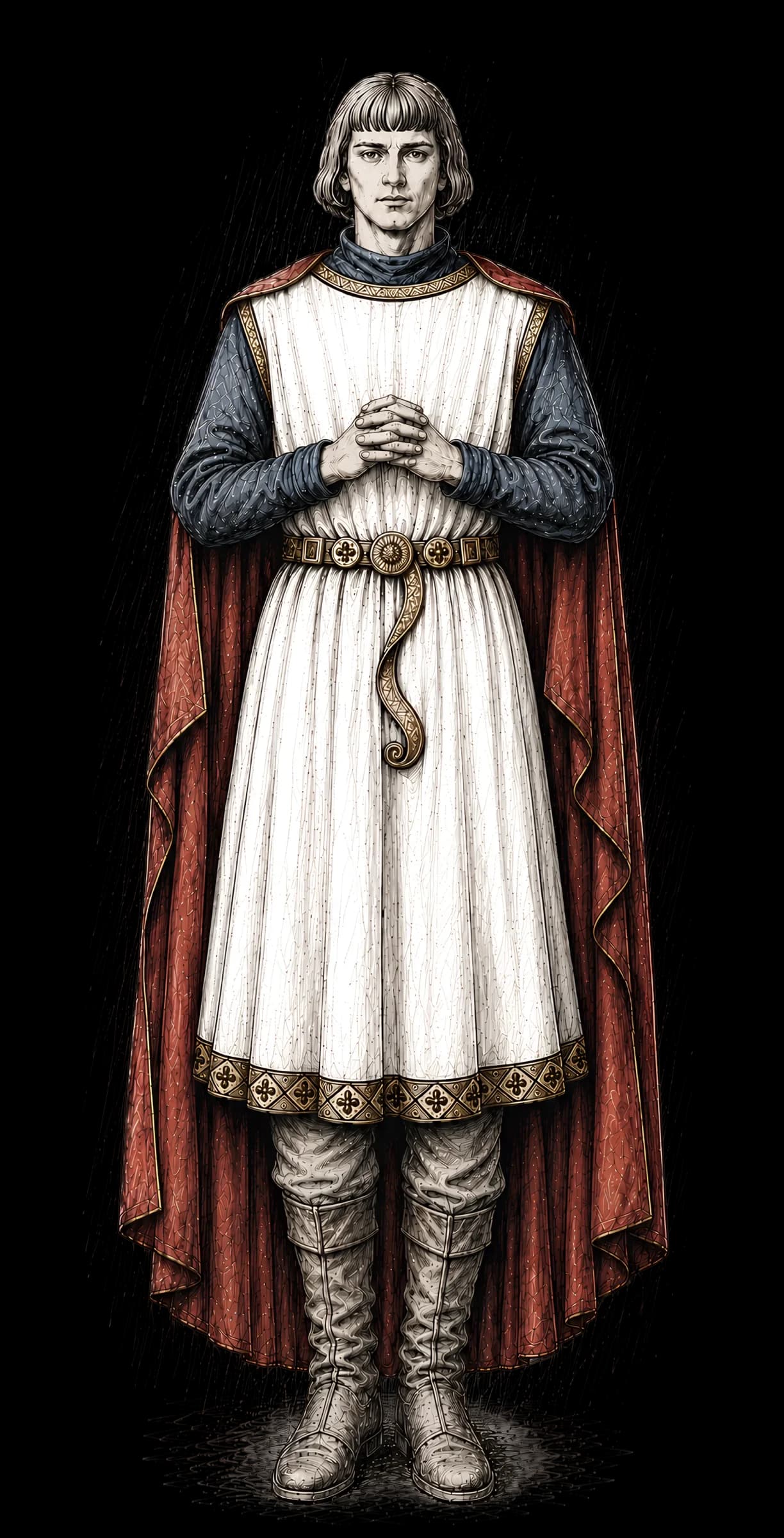
Magnus is shown without crown or weapon, in the white alb of purity, hands folded. No beer answers that like a pale golden ale — bright, clean, nothing dark in it and nothing hidden. It is the everyday pour of the range, for the saint of the common good.
- Peace
- Humility
- Forgiveness
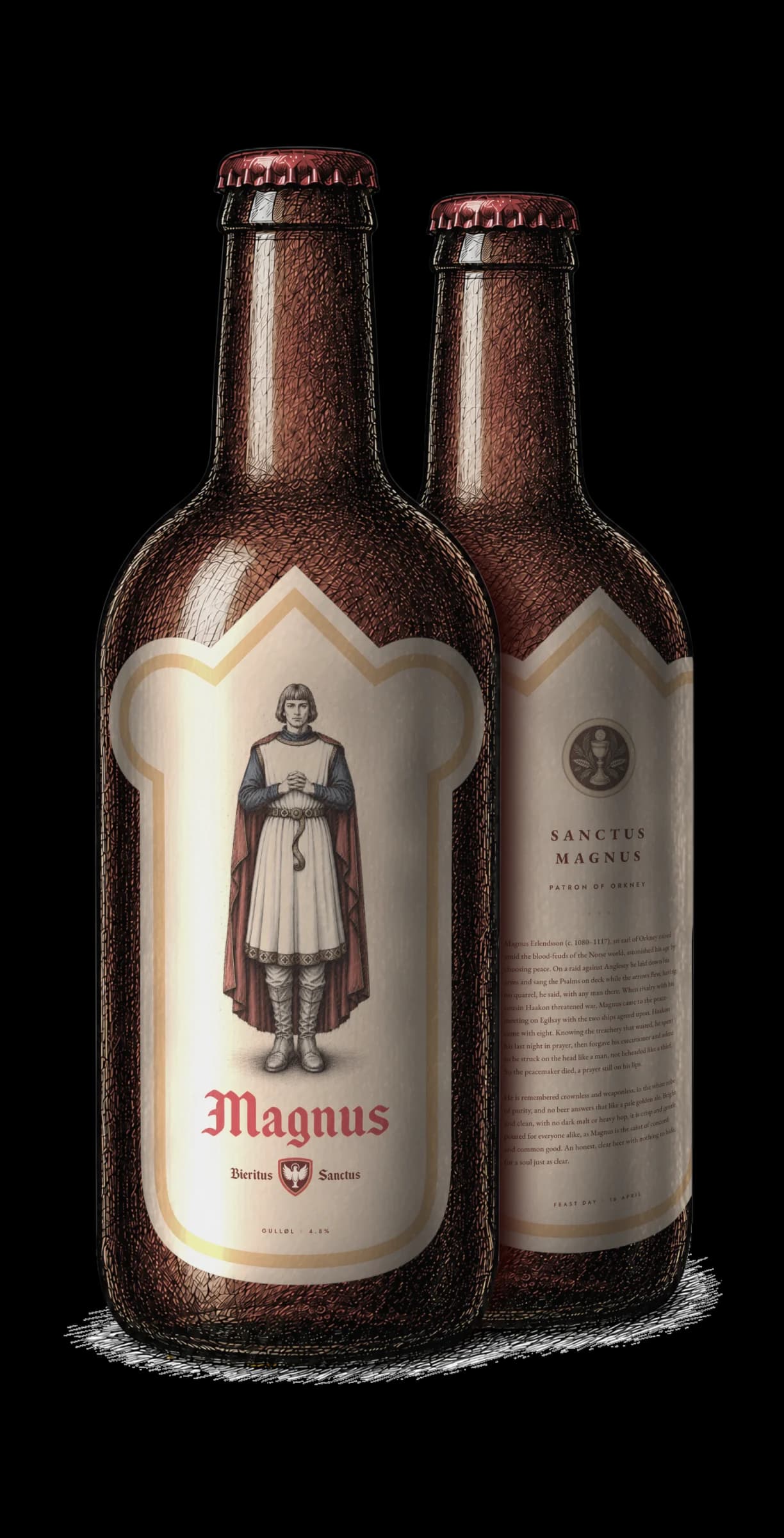
Gulløl
Golden Ale
Pale straw, clear, under a fine white head. Almost nothing but pilsner malt and noble hops: soft bread, a dry herbal snap, no fruit and no caramel. Brewed as a Kölsch and cold-conditioned near freezing, where the sparkle comes from.
- Strength
- 4.8% ABV
- Bitterness
- 22 IBU
- Colour
- 3.5 SRM · pale straw
- Malt
- Pilsner, wheat
- Hops
- Hallertau Mittelfrüh, Tettnang
- Yeast
- Kölsch
- Conditioning
- Cold-conditioned two to four weeks